Monday, 30 October 2017

Thursday, 12 October 2017
Essay: compare how media language is used in the constuction of gender in two print-advertisments for freagrences

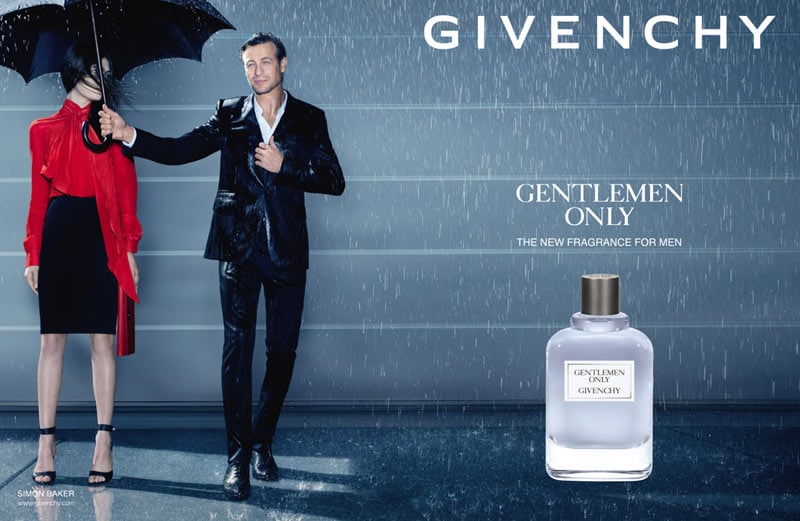
In this essay I will be comparing a Miss Dior advert and Givenchy advert. I will explore how gender ("the state of being male or female with reference to social and cultural differences rather than biological ones), patriarchy ("a system of society or government in which men hold the power and women are largely excluded from it") and objectification ("the action of degrading someone to the status of a mere object") play a role in the adverts
In the Miss Dior advert we can see Natalie Portman topless covering herself with her arms with the product placed in the middle. The picture is taken from a mid shot so her body and facial expression are in shot. Her facial expression seems to be emotionless however it seems as if her eyes are tying to catch the attention of the person viewing the advert. The colours used in the advert are pinks and other pale colours which are often associated with being feminine colours as well as a font which is elegant
which helps tell us the product is intended for a certain gender (females). The
fact she is topless and her eyes look as if she is trying to catch someone's
attention tells us she is there to be looked at which reinforces
objectification and patriarchy as it is most likely straight men who will
"enjoy" looking at it. Also, the fact her body and face is so
flawless leaves us to presume the image has been airbrushed to give her a look
of perfection and enforce the idea that women must be pretty and beautiful.
In the Givenchy advert we see Simon baker in the rain
holding out an umbrella next to a brightly dressed woman with the product
placed next to them and the slogan "gentlemen only". A wide shot is
used so that we can see everything that is going on in the image for example
what they are wearing and what they are both doing. The main colour theme in
the advert is blue which also reinforces gender stereotypes because blue is
seen as a more masculine colour. On the other hand, the woman's shirt is bright
red which makes her stand out, this suggests she is only there to be looked at
as this is a men's fragrance and her face is being covered by her hair meaning
she has no real reason to be in the image apart from to be looked at which is
objectifying her. Patriarchy is also shown in this advert as Simon Baker is the
one holding the umbrella over the woman and letting himself get wet. This shows
patriarchy as it shows him being dominant and gentlemen like which comes back
to the slogan "gentlemen" only which suggests only "manly
men" can use the fragrance (which could put other men down).
From looking at the two adverts it is clear gender plays a
huge role is advertising as they are both clearly made to appeal to certain
genders for certain reasons. It is also clear that stereotypes, objectification
and patriarchy are dominant in the adverts as certain colours were used for men
and women, the women were there just to be looked at and the man was the most
dominant. Therefore, I think moves being made to challenge these problems are a
good idea as stereotypes should be challenged so people are not pressured to be
a certain way and women are not seen as objects in the future.
Evaluation of cross platform advertising
Strengths
|
Potential problems
|
Examples
| |
Viral advertising
| A lot of people see them as they are shared across many platforms | The advert won't stay viral and will lose appeal once people have seen it enough times and are sick of it | Dumb ways to die - public safety advert https://www.youtube.com/watch?v=IJNR2EpS0jw |
Native advertising
| Many people do not realise that what they are seeing are adverts so dont skip past them | People may stop visiting the platform using native advertising if they notice most of the content is just advertisement | "this friendship quiz will tell you which disney duo you and your best friend are" - buzzfeed quiz sponsored by pandora https://www.buzzfeed.com/pandorauk/which-disney-characters-are-you-and-your-best-friend?b=1&utm_term=.fi7Y2beJ2#.voRMj0EXj |
Targeted advertising
| They are relevant to the people seeing them | Some people may think they are an invasion of privacy | Vegan Lip Scrub - Barry M - facebook |
Shoppables and Influencers
| People may want to buy a product because a celebrity they like is wearing it | people might get bored of a celebrity promoting the same brand or product over and over and decide to unfollow them |  |

Monday, 9 October 2017
Tuesday, 26 September 2017
TV Advert Textual Analysis
TV Advert Textual Analysis
The advert is intended for anyone who might use or need a broom. In the advert a girl is bullied and ignored due to the rubbish around her however when she gets a broom and is able to sweep it away she is happy again. One obvious connotation is that with this broom your life will be better and you will be happier just like the girl in the advert which used the persuasive technique of reward.
In the advert we used two different camera angles which were medium long shot and long shot however we could've also used a close up to portray the girls emotions before she got the broom. We also used sad violin music to portray the girls feelings of sadness and being alone and then more upbeat music to show she was happier. Also we had the sad scenes in black and white then the happier scenes in colour which also helped portray the emotions.
We didn't use any logos or slogans in the advert however is would've been a good idea to as a catchy slogan could have made the advert better. On the other hand we used text at the end at the customer review to show what he though of the broom.
We didn't use many persuasive techniques in the advert however given the chance we could've used more. One we did use was a customer review of someone who enjoyed the broom. This is persuasive because if a potential customer were to see a good rating of the broom they may be tempted to buy one for themselves to see if it really is that good
Thursday, 21 September 2017
TV advert Textual Analysis
TV Advert Textual
Analysis
The Haribo Starmix advert is aimed towards both children and adults as the people in the advert are adults but their voices are children. In the advert there a business men and women at a board meeting but instead of talking about the things we would expect they talk about why they enjoy Haribo starmix. The fact that all the adults have children's voices suggests to us Haribo are trying to say that Starmix is for everyone no matter if they're a child or adult.
In the advert they start off with a long shot to show all the people at the meeting. This hot suggests they are going to have a professional meeting however it them zooms in to the first woman who talks about the product. There is then a series of close up shots on each person who speaks so that we can see their emotion and how they feel about Haribo Starmix which was excited and happy. Shot reverse shot was used near the beginning in editing to highlight different people's initial reaction to the product. There was no music during the advert until the end, this helps us pay to the voices and what's being said rather than getting distracted by music. The mise en scene is people dressed up in smart outfits (e.g. suits) around a table in an office as if they are about to have a meeting before one of them pulls out a bag of Haribo Starmix . The fact that all the adults are dressed smart suggests that Haribo Starmix are for everyone no matter who they are and that it brings out the child in everyone.
The slogan for Haribo is "Kids and grown-ups love it so – the happy world of Haribo." which further explains that Haribo is meant for everyone not just children. The advert also uses humour to help pursued people to buy the product. This is done by using the children's voices over the adults as it is instantly seen as strange and funny that professional adults would be saying the things the kids do and have them voices.
Monday, 18 September 2017
Subscribe to:
Posts (Atom)